Antibiotics have been widely used as a cure-all for any disease that people may have. However, contrary to popular belief, antibiotics are not a magic medicine, and they should not be taken carelessly whenever someone feels sick. Over the course of the past forty years, more and more bacteria have become antibiotic resistant due to the overuse of antibiotic medications1. Bacteria become antibiotic resistant through adaptations, or mutations, in their genome in response to exposure to these medications.
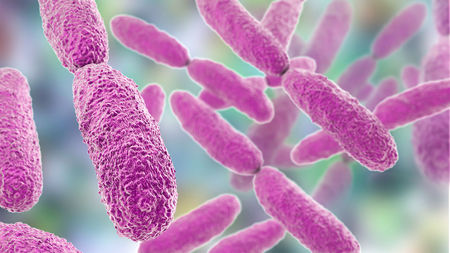
Organisms, usually bacteria, that have become resistant to antibiotics are known as superbugs. The first bacteria to become a superbug was Klebsiella pneumoniae, which causes a fatal pneumonia that is common in hospital settings. The list of superbugs is increasing yearly, as are watch-lists for organisms that may become superbugs. The superbugs that pose the largest threat to populations are Acinobacter, Candida auris, Clostridioides difficile, the Enterobacteriaceae family, and Neisseria gonorrhoeae2.
Is there any hope in halting the spread of superbugs? According to one experiment, it may be possible. Molecular nanomachines have been tested against K. pneumoniae, and a carbapenem has been shown to be effective against this bacteria (which is carbapenem-resistant) after its treatment3. If research continues in this field, hopefully we can manipulate these superbugs into becoming susceptible to antibiotics again.
However, another factor in stopping the rise of superbugs deals with the responsibilities of both patients and healthcare professionals. As an aspiring physician’s assistant, I feel like it is imperative that antibiotic education is communicated with the general public. People need to understand that antibiotics are not a magic pill that should be taken whenever they are sick; if people unnecessarily take antibiotics, their normal microbiome will be impaired. In addition, healthcare professionals only need to prescribe antibiotics when it is appropriate. In some studies, it has been revealed that antibiotics have been inappropriately prescribed 30-50% of the time4. The rise of antibiotic resistance is critical to the health of not only future populations, but also to the health of today’s world population.
Citations:
- “About Antibiotic Resistance.” Centers for Disease Control and Prevention. Centers for Disease Control and Prevention, February 10, 2020. https://www.cdc.gov/drugresistance/about.html#anchor_1552062951754.
- “Biggest Threats and Data.” Centers for Disease Control and Prevention. Centers for Disease Control and Prevention, November 14, 2019. https://www.cdc.gov/drugresistance/biggest-threats.html#carp.
- McCain, Megan L. “Drilling down in the Fight against Bacterial Superbugs.” Science Translational Medicine. American Association for the Advancement of Science, January 1, 2020. https://stm.sciencemag.org/content/12/524/eaba2901.
- Ventola, C Lee. “The Antibiotic Resistance Crisis: Part 1: Causes and Threats.” P & T : a peer-reviewed journal for formulary management. MediMedia USA, Inc., April 2015. https://www.ncbi.nlm.nih.gov/pmc/articles/PMC4378521/.

 Taylor's Microbiology Blog