Monoclonal Antibody Therapy

Monoclonal antibodies are used in many drugs, like Humira, as a source of antibody therapy. Monoclonal antibodies are synthetic antibodies, created from cloned B cells1. They only recognize a single epitope and are expensive to make, so they are only made if these antibodies can result in a substantial profit due to a widespread need and usage of the antibody.

A medication containing a monoclonal antibody that is commonly advertised on television is Humira, or adalimumab. This drug can be used in the treatment of a variety of illnesses: rheumatoid arthritis, psoriatic arthritis, plaque psoriasis, ankylosing spondylitis and Crohn’s disease. It slows or prevents the destruction of joints for patients with arthritis, and it prevents the narrowing of the stomach or intestinal perforation in patients with Crohn’s disease, leading to remission2. This drug works by binding to TNF and blocks its ability to produce IFN alpha, reducing inflammation3.

Although it has many benefits to the health of patients battling these specific diseases, adalimumab has considerable side effects as well. Side effects include4

  • Headache
  • Rash 
  • Nausea 
  • Upset stomach 
  • Swelling, redness or pain at site of injection 
  • Upper respiratory infections 
  • Heart failure (shortness of breath, swelling of ankles and feet, sudden weight gain) 
  • Immune reactions including a lupus-like syndrome (chest discomfort or pain that does not go away, shortness of breath, joint pain, or rash on your cheeks or arms that gets worse in the sun)
  • Liver problems (fatigue, yellow skin or eyes, poor appetite or vomiting, pain on right side of stomach) 
  • Psoriasis 
  • Hypersensitivity reactions (including anaphylaxis) 
  • Reduced levels in blood of platelets and red cells (aplastic anemia)

In addition, it has been associated with many other diseases. It may increase the risk of reactivating the Hepatitis B virus in patients that are chronic carriers. In addition, it may suppress the immune system, so it is associated with minor infections of urinary tract, respiratory tract, and sinuses. Also, it may worsen the symptoms of nervous system diseases. In some studies, cancer developed in patients that took adalimumab. Lastly, it is associated with sepsis, tuberculosis, and fungal infections. If a patient has an active infection, they should not take adalimumab, because it is a TNF blocker medicine that can lower the immune system’s ability to fight off infection5.

Because it binds to and blocks the actions of TNF, adalimumab does impact the immune response. TNF is a cytokine of both the innate and acquired immune system, as its sources are macrophages, T cells and NK cells. Its job is to promote inflammation and regulate certain immune functions, and it is cytotoxic for some tumor cells6. Adalimumab negatively impacts the innate and acquired immune response because it blocks the actions of TNF, and that is why it is important that patients with an active infection do not take this drug so they can effectively fight off their infection.

Although I had seen this medication widely advertised before writing this blog, I never knew that it used a monoclonal antibody or how it specifically treated patients. It is also interesting to see how many monoclonal antibody therapies are available, considering that they were first made in 1975. Hopefully research in monoclonal antibody therapy can continue so more patients of different diseases can be helped.

References:

  1. Anderson, Denise, Sarah N. Salm, Deborah P. Allen, and Eugene W. Nester. Nesters Microbiology: a Human Perspective. New York: McGraw-Hill Education, 2019. p. 465
  2. Omudhome Ogbru, PharmD. “Adalimumab (Humira): Arthritis Drug Uses, Dosage & Side Effects.” MedicineNet. MedicineNet, July 1, 2019. https://www.medicinenet.com/adalimumab/article.htm.
  3. “Learn How HUMIRA Works for Moderate to Severe Crohn’s Disease.” HUMIRA® Crohn’s Disease Medication | How It Works. Accessed April 19, 2020. https://www.humira.com/crohns/how-humira-works-for-crohns.
  4. “HUMIRA® (Adalimumab): A Biologic Treatment Option.” HUMIRA® (adalimumab) | A Biologic Treatment Option. Accessed April 19, 2020. https://www.humira.com/.
  5. “HUMIRA® (Adalimumab): A Biologic Treatment Option.” HUMIRA® (adalimumab) | A Biologic Treatment Option. Accessed April 19, 2020. https://www.humira.com/.
  6. Anderson, Denise, Sarah N. Salm, Deborah P. Allen, and Eugene W. Nester. Nesters Microbiology: a Human Perspective. New York: McGraw-Hill Education, 2019. p. 370.
COVID-19 Antibody Testing

As you all are aware, COVID-19 is the current pandemic wreaking havoc globally. Schools have been shut down, people have had to stay home from work, and only “essential” jobs are able to continue at this time. All of these precautions have occurred to not only stop the spread of COVID-19, but also to help relieve the healthcare workers from an onslaught of patients. Currently, the healthcare professionals are increasing their testing for the coronavirus, and there are two types of tests available. One is called the NAAT (nucleic acid amplification test) and it tests for the virus’s RNA genome1. The other test is a serology test, and it finds antibodies present in the blood to see if the patient’s body is fighting off COVID-19. Specific antibodies allow experts to determine if the body is fighting off the virus or not2.

From the serology test, a titer is gathered. This titer determines how much of an antibody is present in the blood. According to the Asian Pacific Journal of Allergy and Immunology, the antibody IgM peaks around day 9 of the coronavirus infection and IgG increases during the second week of the viral infection. Therefore, depending on the IgM and IgG titers, researchers can determine if the patient is in the process of fighting off coronavirus, if the patient has recovered from coronavirus, or if the patient has not had coronavirus.

If a patient tests positive for only an IgM titer, this means that the patient has come into contact with the coronavirus, because IgM is the first antibody released to fight off an infection. This also means that the patient is in the early stages of infection, because IgG has not been found in the blood yet. If a patient tests positive for both IgM and IgG, this means that the patient is in the middle stages of infection and that they are beginning to make memory cells that will be better equipped to fight off this infection if they face it in the future. If the patient is only IgG positive, then the patient has already fought off the active infection of COVID-19, is in the last stages of infection or is immune to COVID-19. Lastly, if a patient tests negative for both IgM and IgG, then the healthcare professional can determine that the patient has not been exposed to coronavirus.

I hope that the researchers can improve their NAAT and serology testing so that everyone can more efficiently be tested for coronavirus, and I hope in rural towns like my own, that testing becomes more prevalent and available for the population. In addition, I think it is important that people understand how these tests work and what the test results mean, as understanding every aspect of the coronavirus and its treatment will help ease the minds of the global population and help us all work together in protecting ourselves against COVID-19.

References:

  1. Center for Devices and Radiological Health. “FAQs on Diagnostic Testing for SARS-CoV-2.” U.S. Food and Drug Administration. FDA. Accessed April 12, 2020. https://www.fda.gov/medical-devices/emergency-situations-medical-devices/faqs-diagnostic-testing-sars-cov-2.
  2. “Global Progress on COVID-19 Serology-Based Testing.” Johns Hopkins Center for Health Security, April 10, 2020. http://www.centerforhealthsecurity.org/resources/COVID-19/serology/Serology-based-tests-for-COVID-19.html.

Personalized Medicine in Treating Cancer

A new emerging field of cancer treatment is T cell and dendritic cell therapy, and it is commonly referred to as “personalized medicine”. CAR-T cell therapy includes extracting T cells from a patient and manipulating these cells so they exhibit new receptors. These cells are then reintroduced into the patient’s body with the capability of producing chemicals to fight off cancer1. These manipulated T cells will multiply in the body after being reintroduced and create an immune response. Although dendritic cell (DC) therapy is also a form of immunotherapy for cancer patients, it is different in that it manipulates dendritic cells rather than T cells. This therapy consists of extracting dendritic cells from the blood of a patient, exposing these cells to the patient’s specific cancer so they are “sensitized” to it, and reintroducing the “sensitized” cells into the blood so they can more efficiently fight off cancer2.

Recently, T cell therapy has been approved to treat lymphoma, a cancer that affects the lymph system. In a clinical trial, Yescarta (a type of T cell therapy) was used, resulting in an 83% response rate, with 58% having a complete response. In a follow up of this trial, 47% of patients survived out of a population of 119 participants. In another clinical trial, KTE-X19 was used for mantle cell lymphoma, and this resulted in a 93% response rate, 67% complete response, and 83% survival rate3.

In addition, there have been clinical trials to study the effectiveness of T cell therapy in other cancers. For example, the effectiveness of CAR-T cell therapy has been studied in multiple myeloma, a cancer of plasma cells. Although this therapy has shown to be effective, its benefits are overshadowed by more severe side effects, like cytokine release syndrome. As a result, future studies need to come up with a solution to maximize the benefits of CAR-T cell therapy while minimizing side effects4.

Although T cell therapy shows promise in the field of cancer therapy, there are some drawbacks of this treatment. First, it is extremely costly. The two available T cell therapies, Kymriah and Yescarta, cost about $510,000 and $400,000, respectively5. Therefore, only limited populations would be able to afford this care. In addition, there are several side effects associated with the treatments. For example, cytokine release syndrome is common due to the multiplication of manipulated T cells in the body6. It can also cause neurological side effects such as confusion, seizures, tremors, and speech problems, but clinical trials are working to reduce these side effects by remodeling the therapy7.

I hope that these therapies continue to be researched and modified so that they can more effectively treat cancer patients and can be made more affordable to a wider population. Throughout my life, I have had 3 family members battle three different types of cancer, so this is a very important topic to me. I had never heard of this type of personalized treatment before researching for this blog, and I am very interested to see how this research continues to progress in future years.

References:

  1. Verta, Jennifer. “CAR T-Cell Therapy & Mesothelioma Treatment.” Mesothelioma Hub. Accessed April 5, 2020. https://www.mesotheliomahub.com/treatment/immunotherapy/car-t-cell/.
  2. “Dendritic Cell Therapy: Treatments.” Infusio. Accessed April 5, 2020. https://www.infusio.org/treatments/dendritic-cell-therapy/.
  3. Weaver, C. H. “CAR T-Cell Therapy Treatment for Lymphoma – An Update.” Cancer Connect. Accessed April 5, 2020. https://news.cancerconnect.com/non-hodgkins-lymphoma/car-t-cell-therapy-treatment-for-lymphoma-an-update-TABHDEuu1UqYaINbQGN3Jw.
  4. Wu, Chao et al. “Chimeric antigen receptor T cell therapies for multiple myeloma.” Journal of Hematology and Oncology. Accessed April 5, 2020. https://jhoonline.biomedcentral.com/articles/10.1186/s13045-019-0823-5
  5. Zhao, Lijun, and Yu J Cao. “Engineered T Cell Therapy for Cancer in the Clinic.” Frontiers in immunology. Frontiers Media S.A., October 11, 2019. https://www.ncbi.nlm.nih.gov/pmc/articles/PMC6798078/.
  6. “CAR T-Cell Therapy and Its Side Effects.” American Cancer Society. Accessed April 5, 2020. https://www.cancer.org/treatment/treatments-and-side-effects/treatment-types/immunotherapy/car-t-cell1.html.
  7. NCI Staff. “Remodeled CAR T-Cell Therapy Causes Fewer Side Effects.” National Cancer Institute. Accessed April 5, 2020. https://www.cancer.gov/news-events/cancer-currents-blog/2020/car-t-cell-therapy-lymphoma-reduced-side-effects.

Life during the Coronavirus Quarantine

Since spring break, I have been living at home, which is not the most ideal environment for me. I am from a very small town where there is not much to do, so you could say I have been extremely bored for about 3 weeks now. In these past three weeks, my whole year’s plans have been shattered, as my summer study abroad has gotten cancelled, my plans for the rest of my junior year have been cancelled, I had to move out of my sorority house, and I have been separated from my friends for who knows how long.

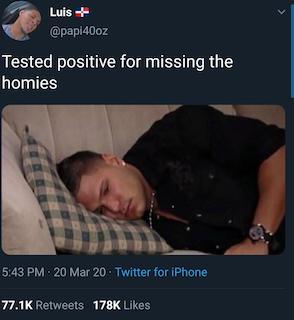
Meme taken from Twitter (@papi40oz)

With that being said, I have been trying to pass the time (which seems to move in slow motion) in a variety of ways. I started by watching a new series on Amazon Prime, “Hunters,” with my dad. Although it was an amazing show and I recommend it to everyone, unfortunately, we binge-watched it in 3 days so that did not last long. Next, I started re-watching some shows on Netflix that I love, like “New Girl” and “Parks and Recreation.” These are incredibly entertaining, but I get bored after watching a couple of episodes in a row, so I alternate watching these with watching HGTV shows. I know it sounds lame, but I love to imagine remodeling homes.

With online classes starting this week, it has been easier to pass the time and I definitely don’t feel as bored as I did. However, I do miss UNC so much. It’s only been a week, but I know it’s only going to get harder to be separated from my friends and from the best town in the world. In addition, I also spent every weekend with my brother and sister-in-law, as they live in Durham, so I know it’s going to be frustrating not being able to see them as much either. Luckily, I have FaceTimed many of my friends and I am still able to talk to them, but I am going to have to get used to not seeing them as much.

Meme taken from Twitter (@z.fatimaaa)

This quarantine and coronavirus outbreak is not what any of us wanted, so it does bring me some comfort that everyone is in the same boat and that I am not the only one whose plans got uprooted. I hope that life can go back to normal soon, and that we flatten the curve during quarantine.

Syphilis in the United States

Sexually transmitted diseases, or STDs, are widespread worldwide. They can be transmitted through a variety of methods, from blood, semen, or vaginal and other bodily fluids. In addition, transmission can occur nonsexually, by sharing needles or by blood transfusions. STDs can also exist as congenital diseases, spreading from a mother to her baby during pregnancy, by crossing the placenta, or during childbirth, by the child coming into direct contact with the disease exiting the birth canal1.

Within the past year in the United States, STDs have been on the rise. Three STDs in particular have had significant increases: syphilis, gonorrhea, and chlamydia. The largest cases of syphilis have been found in newborns, as cases increased 40% in newborns2. STDs can prove to be especially dangerous in infants, because, although STDs may not cause death in adults, they can be fatal in infants. In addition, the CDC report showed the most reports of chlamydia in the United States ever, as well as the highest reported cases of gonorrhea since 1991.

I was interested to see that syphilis has been on the rise in recent years, as that is not an STD that is commonly discussed in today’s society. According to one study, this increasing rate of syphilis can be attributed to social and behavioral activities, like online sex partners, dating apps, unsafe sex practices and drug abuse. In addition, syphilis is most commonly found in men who have sex with men3. Since syphilis appears in stages, I think this can also contribute to the spread of syphilis, as many infected individuals may not know that they are infected. Primary syphilis is marked by a small sore, or chancre, that appears, and it is usually painless. Secondary syphilis is much more identifiable, as it includes a widespread rash that begins on the trunk and spreads to the rest of the body. Also, wart-like sores may appear on the mouth and genitals, as well as muscle aches, a fever, sore throat, and swollen lymph nodes. Ideally, a clinician would diagnose and treat syphilis by this stage, but if it is not treated, syphilis can progress to a latent and even a tertiary phase. In the latent phase, no signs and symptoms appear. In the tertiary stage, major complications can occur that affect the brain, nerves, heart, blood vessels, bones, liver, eyes and joints4.

In order to prevent STDs like syphilis, public awareness of the rising rates of STDs and of prevention strategies needs to be spread. The most effective strategy of preventing STDs is abstinence, but if one is sexually active, it is integral to practice monogamy and to use condoms consistently and correctly5. Lastly, even though I had sex education in high school, I have noticed that resources that increase awareness of STDs are not as prevalent in everyday society. I think improving these resources will also be beneficial in stopping the rise of STDs.

Citations:

  1. “Sexually Transmitted Diseases (STDs).” Mayo Clinic. Mayo Foundation for Medical Education and Research, October 29, 2019. https://www.mayoclinic.org/diseases-conditions/sexually-transmitted-diseases-stds/symptoms-causes/syc-20351240.
  2. “STDs Continue to Rise in the U.S. Press Release.” Centers for Disease Control and Prevention. Centers for Disease Control and Prevention, October 8, 2019. https://www.cdc.gov/nchhstp/newsroom/2019/2018-STD-surveillance-report-press-release.html.
  3. Schmidt, Rebecca, Paul James Carson, and Rick J Jansen. “Resurgence of Syphilis in the United States: An Assessment of Contributing Factors.” Infectious diseases. SAGE Publications, October 16, 2019. https://www.ncbi.nlm.nih.gov/pmc/articles/PMC6798162/.
  4. “Syphilis.” Mayo Clinic. Mayo Foundation for Medical Education and Research, September 19, 2019. https://www.mayoclinic.org/diseases-conditions/syphilis/symptoms-causes/syc-20351756.
  5. “Sexually Transmitted Diseases (STDs).” Mayo Clinic. Mayo Foundation for Medical Education and Research, October 29, 2019. https://www.mayoclinic.org/diseases-conditions/sexually-transmitted-diseases-stds/symptoms-causes/syc-20351240.

Could all bacteria become antibiotic resistant in our lifetime?

Antibiotics have been widely used as a cure-all for any disease that people may have. However, contrary to popular belief, antibiotics are not a magic medicine, and they should not be taken carelessly whenever someone feels sick. Over the course of the past forty years, more and more bacteria have become antibiotic resistant due to the overuse of antibiotic medications1. Bacteria become antibiotic resistant through adaptations, or mutations, in their genome in response to exposure to these medications.

Organisms, usually bacteria, that have become resistant to antibiotics are known as superbugs. The first bacteria to become a superbug was Klebsiella pneumoniae, which causes a fatal pneumonia that is common in hospital settings. The list of superbugs is increasing yearly, as are watch-lists for organisms that may become superbugs. The superbugs that pose the largest threat to populations are Acinobacter, Candida auris, Clostridioides difficile, the Enterobacteriaceae family, and Neisseria gonorrhoeae2.

Is there any hope in halting the spread of superbugs? According to one experiment, it may be possible. Molecular nanomachines have been tested against K. pneumoniae, and a carbapenem has been shown to be effective against this bacteria (which is carbapenem-resistant) after its treatment3. If research continues in this field, hopefully we can manipulate these superbugs into becoming susceptible to antibiotics again.

Klebsiella pneumoniae, the first discovered superbug. Photo taken from Science Magazine (https://www.sciencemag.org/news/2018/09/scientists-engineer-powerful-new-weapon-against-antibiotic-resistant-bacteria)

However, another factor in stopping the rise of superbugs deals with the responsibilities of both patients and healthcare professionals. As an aspiring physician’s assistant, I feel like it is imperative that antibiotic education is communicated with the general public. People need to understand that antibiotics are not a magic pill that should be taken whenever they are sick; if people unnecessarily take antibiotics, their normal microbiome will be impaired. In addition, healthcare professionals only need to prescribe antibiotics when it is appropriate. In some studies, it has been revealed that antibiotics have been inappropriately prescribed 30-50% of the time4. The rise of antibiotic resistance is critical to the health of not only future populations, but also to the health of today’s world population.

Citations:

  1. “About Antibiotic Resistance.” Centers for Disease Control and Prevention. Centers for Disease Control and Prevention, February 10, 2020. https://www.cdc.gov/drugresistance/about.html#anchor_1552062951754.
  2. “Biggest Threats and Data.” Centers for Disease Control and Prevention. Centers for Disease Control and Prevention, November 14, 2019. https://www.cdc.gov/drugresistance/biggest-threats.html#carp.
  3. McCain, Megan L. “Drilling down in the Fight against Bacterial Superbugs.” Science Translational Medicine. American Association for the Advancement of Science, January 1, 2020. https://stm.sciencemag.org/content/12/524/eaba2901.
  4. Ventola, C Lee. “The Antibiotic Resistance Crisis: Part 1: Causes and Threats.” P & T : a peer-reviewed journal for formulary management. MediMedia USA, Inc., April 2015. https://www.ncbi.nlm.nih.gov/pmc/articles/PMC4378521/.

The Status of Polio Vaccinations Today

One disease that the United States population, fortunately, does not have to fear is polio. Since 1979, polio has been eradicated from the country1. However, polio is still prevalent globally in countries like Pakistan, Afghanistan, and many African countries2. Still today, polio eradication efforts are prevailing worldwide, and a lot of progress has been made in eliminating the disease for good.

In the United States, the primary vaccination used is IPV, or the inactivated polio vaccine, which is injected. Children receive 4 doses of this vaccine spanning from two months old to six years old3. In addition, it protects against all strains of poliovirus by helping the body produce antibodies in the bloodstream4. On the other hand, the OPV vaccine, or the oral polio vaccine, is the main vaccine used in the global eradication efforts. It is very cheap compared to the IPV, and unlike the IPV, it allows the vaccine to replicate in the intestines, allowing the patient to develop antibodies to the virus in this way. In addition, it serves as passive immunization in places that lack sanitation and proper hygiene5.

As of October 24, 2019, two strains of the polio virus, wild poliovirus type 3 and wild poliovirus type 2, have been eradicated across the globe6. This means that there is only one strain, wild poliovirus type 1, that remains in the world. The country most at risk for polio today and that has reported cases of the virus this year is Pakistan, but the countries endemic with polio are Pakistan, Afghanistan, and Nigeria7. This poses a threat for the virus entering the EU, so it is integral that the European population continues to be vaccinated to halt the spread of the virus8.

As a child, I was given a polio vaccine by my primary care doctor, and I never second-guessed that people in other countries, especially those in the Middle East and Asia, did not have the same care during childhood. I think awareness of the polio vaccine needs to be spread and that we should realize how incredible it is that two out of three strains are eradicated worldwide! Awareness about the effectiveness of the vaccine and the implications of not being vaccinated needs to be especially stressed in the anti-vaxxer population, because the eradication of all strains of polio could be completed in our lifetime and this is no small feat. In addition, we should not consider the poliovirus as a thing of the past and realize that many populations do not have the same opportunity to get vaccinated as a child.

Citations:

  1. “Polio Elimination in the U.S.” Centers for Disease Control and Prevention. Centers for Disease Control and Prevention, October 25, 2019. https://www.cdc.gov/polio/what-is-polio/polio-us.html.
  2. “This Week.” GPEI, February 19, 2020. http://polioeradication.org/polio-today/polio-now/this-week/.
  3. “Polio Vaccination in the U.S.” Centers for Disease Control and Prevention. Centers for Disease Control and Prevention, September 6, 2019. https://www.cdc.gov/polio/what-is-polio/vaccination.html.
  4. “IPV.” GPEI. Accessed February 23, 2020. http://polioeradication.org/polio-today/polio-prevention/the-vaccines/ipv/.
  5. “OPV.” GPEI. Accessed February 23, 2020. http://polioeradication.org/polio-today/polio-prevention/the-vaccines/ipv/.
  6. “Two out of Three Wild Poliovirus Strains Eradicated.” World Health Organization. World Health Organization, October 24, 2019. https://www.who.int/news-room/feature-stories/detail/two-out-of-three-wild-poliovirus-strains-eradicated.
  7. http://polioeradication.org/wp-content/uploads/2020/02/Weekly-GPEI-Polio-Analyses-WPV-20200211.pdf
  8. “Update on the Global Polio Situation and Implications for the EU/EEA.” European Centre for Disease Prevention and Control, December 6, 2019. https://www.ecdc.europa.eu/en/news-events/update-global-polio-situation-and-implications-eueea.

The Microbiome and Human Health

In health magazines, it is declared that maintaining a healthy microbiome is integral to physical and mental health — but what is our microbiome, and what does it do? In short, our microbiome is the microorganisms, like bacteria, that live in and on our bodies. They improve our health through various mechanisms like protecting us against pathogens and digesting some foods. However, while certain microbiota have been linked to enhancing health, others have been linked to causing disease.

The most commonly discussed microbiome in humans is the “gut microbiome,” or the microbiome from our gastrointestinal tract. In healthy individuals, this microbiome is known to be diverse, but its composition varies from person to person and depends on geographical location1. According to an article in the Journal of Biosciences, specific changes in a healthy gut microbiome can create dysbiosis, or an imbalance, in the normal microbiome. This can lead to diseases, such as obesity, inflammatory bowel disease, and diabetes. For example, it has been found that a large increase of Firmicutes and a large decrease in Bacteroidetes is correlated with obesity2.

The gut microbiome is not only related to intestinal diseases, but seems to have a connection to respiratory health as well. Studies of the gut-lung axis show that the gut and lungs are in constant communication, and the gut microbiota can directly affect lung health. For example, in an experiment where strains of Lactobacillus are ingested, mice were protected from influenza-like illnesses, Streptococcus pneumoniae and Klebsiella pneumoniae3.

Although we know that changes in the microbiome can lead to disease, how do changes in the human microbiome occur? For the gut microbiome, diet plays an effective role in its homeostasis. It has been found that high fat and low fiber diets result in a less diverse gut microbiome, while high fiber and high protein diets promote the growth of certain microbiota. Other behaviors that can shape the gut microbiome are exercise and exposure to the environment. Engaging in regular physical exercise and exposure to the environment will improve the gut microbiota4. Interestingly, a method that proves to have significant results in restoring the gut microbiota is fecal microbiota transplantation5. Our microbiome may be unseen and not commonly discussed in health topics, but it is integral to our health. By maintaining a healthy lifestyle, we can ensure that we have a good microbiome that will protect us from diseases and pathogens.

Citations:

  1. Das, Bhabatosh, and G Balakrish Nair . “Homeostasis and Dysbiosis of the Gut Microbiome in Health and Disease.” UNC Chapel Hill Libraries. Journal of Biosciences, September 20, 2019. https://link-springer-com.libproxy.lib.unc.edu/article/10.1007/s12038-019-9926-y.
  2. Das, Bhabatosh, and G Balakrish Nair . “Homeostasis and Dysbiosis of the Gut Microbiome in Health and Disease.” UNC Chapel Hill Libraries. Journal of Biosciences, September 20, 2019. https://link-springer-com.libproxy.lib.unc.edu/article/10.1007/s12038-019-9926-y.
  3. Wypych, Tomasz P, Lakshanie C Wickramasinghe, and Benjamin J Marsland. “The Influence of the Microbiome on Respiratory Health.” UNC Chapel Hill Libraries. Nature Immunology, September 9, 2019. https://www-nature-com.libproxy.lib.unc.edu/articles/s41590-019-0451-9#Sec7.
  4. Das, Bhabatosh, and G Balakrish Nair . “Homeostasis and Dysbiosis of the Gut Microbiome in Health and Disease.” UNC Chapel Hill Libraries. Journal of Biosciences, September 20, 2019. https://link-springer-com.libproxy.lib.unc.edu/article/10.1007/s12038-019-9926-y.
  5. Wypych, Tomasz P, Lakshanie C Wickramasinghe, and Benjamin J Marsland. “The Influence of the Microbiome on Respiratory Health.” UNC Chapel Hill Libraries. Nature Immunology, September 9, 2019. https://www-nature-com.libproxy.lib.unc.edu/articles/s41590-019-0451-9#Sec7.

The Threat of Influenza in the United States

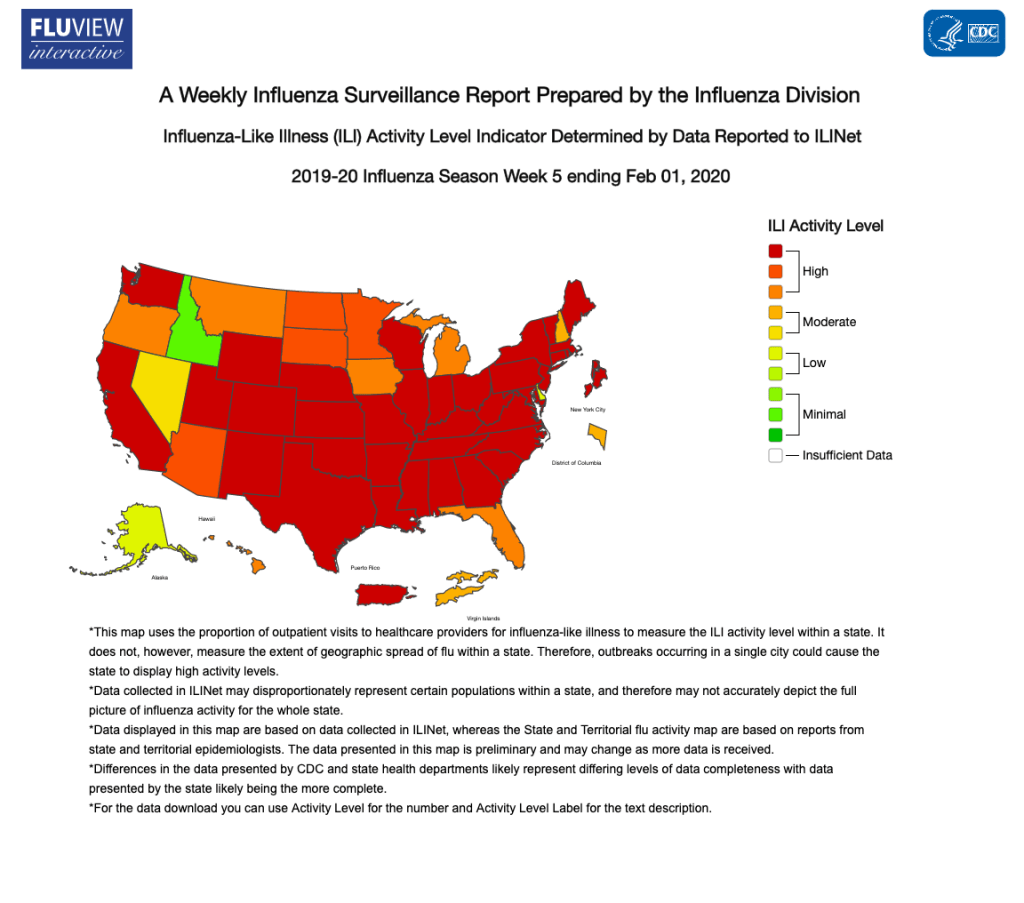
This winter season, people are gripped with fear of becoming victim to the newest virus: the coronavirus. However, the United States population needs to pay more attention to a disease that strikes the country every year without fail: the flu. Each year, the United States prepares itself for the flu season that will ultimately strike during the fall and winter. According to the CDC, the flu has caused between 9 million and 45 million illnesses annually in the United States alone. It is marked by cough, sore throat, fever and muscle or body aches1.

This season, there is no exception for the flu’s aggression. The CDC has estimated that there have been 19 million illnesses, 180,000 hospitalizations and 10,000 deaths as a result of the flu. Of the influenza-associated deaths, 68 were pediatric2. In addition, the CDC predicts that the flu will continue to impact people at high rates through the end of February3. Because of this, we need to practice preventative strategies to reduce the spread of the flu. The most effective preventative strategy is getting vaccinated. This year, it is not known the percentage of Americans vaccinated, but vaccine effectiveness is predicted to be between 40% and 60% for reducing the risk of the flu4.

Influenza Activity in the United States, provided by the CDC

Vaccinations are integral in prevention of the flu. This year, the vaccine protects against three strains, including two Influenza A strains and one Influenza B strain. It is recommended to get the vaccine before flu activity begins, by the end of October5. Vaccinations are protective for a variety of things. Most importantly, it can keep people from getting the flu. Moreover, it reduces the risk of hospitalization from the flu and the severity of the disease, protects women during and after pregnancy, and is especially effective in children. In addition, it helps maintain herd immunity within the United States6. Vaccinations are not only helpful to yourself, but also to everyone you interact with or come into contact with daily. It takes a cooperative effort to fight off the flu, and by practicing preventative strategies, we can lower the flu’s impact each year.

Andrew Wakefield and His Impact on the Future of Vaccination

In recent years, anti-vaccination movements have been on the rise worldwide. Although anti-vaccination movements existed previous to Andrew Wakefield’s 1998 study, their presence and impact increased dramatically after the release of his study. Wakefield’s study implicated that the MMR vaccine led to autism in children. In 2010 this publication was completely retracted, allowing this false information to be spread and maintained for twelve years.

The Indian Journal of Psychiatry analyzed Wakefield’s many problematic components of his case study.  First, there were only twelve patients in his study, which is an extremely small sample size. Moreover, these participants were from a population of patients that were referred to a pediatric gastroenterologist, further suppressing a randomized, representative sample of the population. It was also discovered that Wakefield’s study was funded by lawyers who had been suing vaccine-producing companies at the time. Most importantly, his research has not been verified by other independent scientists1.

The claims made by Andrew Wakefield and his colleagues produced detrimental reactions by parents. Scared that their kids would develop autism as a result of being vaccinated, parents decided not to vaccinate their young children. Vaccine hesitancy has now become prevalent in over “90% of the countries in the world2.” This has resulted in an increase in cases such as measles, mumps and rubella, along with other preventable diseases. For example, in 2000 the measles was declared eradicated in the US, but after vaccinations decreased following Wakefield’s claims, measles has returned to the US in a series of outbreaks, such as the 2015 Disneyland outbreak in California3. Additionally, MMR vaccinations have reduced in the UK, and herd immunity has dropped below WHO standards in many places4.

An interesting takeaway I have from this research is that a debate has been created over the ethics in requiring people to get vaccinated. In a society where independence and pro-choice over a variety of issues is increasingly being valued, people are further applying these ideals to vaccinations. This can be problematic, because many people who are choosing to not vaccinate themselves or their children are misinformed, due to not only the spread of Wakefield’s study, but also to many falsified social media stories. The Journal of the Law and Biosciences argues that vaccine policy and outreach programs need to be modified to appeal to both anti-vaxxers and to those who vaccinate to improve public health worldwide. Furthermore, as a society, we need to be wary about what we read online and make sure to look into research behind many scientific claims to ensure that it is factual.

Citations:

  1. Rao, T S Sathyanarayana, and Chittaranjan Andrade. “The MMR Vaccine and Autism: Sensation, Refutation, Retraction, and Fraud.” Indian Journal of Psychiatry. Medknow Publications, April 2011. https://www.ncbi.nlm.nih.gov/pmc/articles/PMC3136032/.
  2. “Vaccine hesitancy: a generation at risk.” The Lancet. Elsevier Ltd, May 2019. https://www.thelancet.com/journals/lanchi/article/PIIS2352-4642(19)30092-6/fulltext.
  3. Bowes, Johnathan. “Measles, Misinformation, and Risk: Personal Belief Exemptions and the MMR Vaccine.” OUP Academic. Oxford University Press, November 22, 2016. https://academic.oup.com/jlb/article/3/3/718/2566733#95525022.
  4. “Vaccine hesitancy: a generation at risk.” The Lancet. Elsevier Ltd, May 2019. https://www.thelancet.com/journals/lanchi/article/PIIS2352-4642(19)30092-6/fulltext.